MyPain.ca
MyPain.ca

Patient Education Initiative

MyPain.ca
  • Remedies

Can Using Narcotic Medications Make The Pain Worse?

  • June 8, 2013
  • Ashley Villarruel

WHAT IS OPIOID INDUCED HYPERALGESIA? WHY IS IT IMPORTANT FOR PAIN PATIENTS?
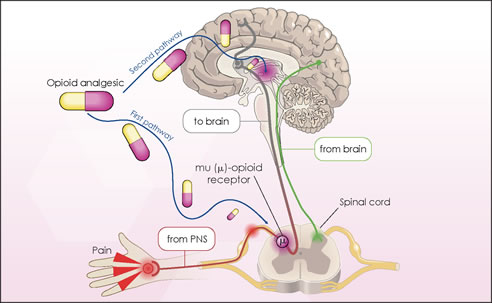
 

When a patient uses morphine or any of its by-products, called, as a group, opioids, tolerance emerges over time. This is because of changes that happen at a cellular level and their opioid receptors, where the medication molecule connects to the cells. However, there might be something else happening as well. Opioid analgesics may cause more pain after a while instead of killing the pain. It means that the cells go through some changes, along with other changes in descending pain regulating pathways in spinal cord that results in less effect of opioids.

 
We always knew that patients with addictions to narcotics have a lower threshold to pain and feel more pain with painful events. However, it is interesting to find out now that long term use of opioids can lead into central nervous system and peripheral cellular changes that would lead into feeling more pain, instead of having analgesia with the use of narcotic medications. This is called opioid induced hyperalgesia or OIH.
 

The importance of this phenomenon is for the pain patients who are using narcotic medications for a long time and do not get proper pain control. It would be better for these patients to be switched to another type of medication for a while. This is called opioid rotation. It means the patient will be taken off the primary medication and put on a lower dose of a different opioid. Nonetheless, at times it maybe needed to take the
patient off the opioids all together and after a while restart with a very low dose to achieve a better pain control.

 
These changes are not easy tasks and need to be done by physicians who are familiar with this process. If one is using high doses of narcotic medications and the pain is not controlled well or if the pain has changed gradually in it’s character and has turned into neuropathic type of pain with burning, pins and needles characteristics, then the chances are that OIH is being established. Patients and doctors need to be informed about this condition and work together to correct it.

Previous Article
  • Chronic Pain

CONQUERING PAIN

  • June 7, 2013
  • Dr. Kevin Rod
View Post
Next Article
  • Chronic Pain

What Is Arthritis? Why Does Arthritis Hurt?

  • June 10, 2013
  • Ashley Villarruel
View Post

Leave a Reply Cancel reply

You must be logged in to post a comment.

ZENDOSE Tweets
Tweets about @Drkevinrod


You can use this site for a Mind Body Wellness program free of charge.

Contact Me to learn how.


This blog is for sharing ideas among us. Simply "Login" using your Facebook, Google or Twitter account and comment and share your ideas in the comments section.

>> Visit Presentation Slide page

Recent Posts
  • Dr. Kevin Rod on theZoomer talks about pain and graceful aging
  • Pain Reprocessing Therapy (PRT)
  • Elbow Exercises
  • Wrist Exercises
  • Anti-Inflammatory Diet to Help Ease Chronic Pain
Recent Comments
  • Why Your Illness Doesn’t Define You - Seeking Serenity and Harmony on Disuse Syndrome and Chronic Pain
  • What is the relationship of Mental Health and Chronic Pain or Chronic Conditions? – Toronto Poly Clinic on What is the relationship of Mental Health and Chronic Pain or Chronic Conditions?
  • Guest Post: How to deal with a difficult diagnosis on Disuse Syndrome and Chronic Pain
  • when i cough my pubic area hurts – Ascharters on PELVIC PAIN, WHY DO WE GET CHRONIC PELVIC PAIN?
  • why does my groin area hurt female – Ascharters on PELVIC PAIN, WHY DO WE GET CHRONIC PELVIC PAIN?
Check out the Archives
MyPain.ca
Patient Education Initiative

Input your search keywords and press Enter.